Back to Work
AI & Automation

Digitrack Enterprise Resource Planning App

Replaced five fragmented warehouse apps with one intelligent ERP platform—cutting operational complexity by 80% through intuitive design and AI-powered automation that warehouse teams actually want to use

Client Digitrack
Year 2025
Services UI/UX Design, TypeScript Development, API Integration
Duration 5 months
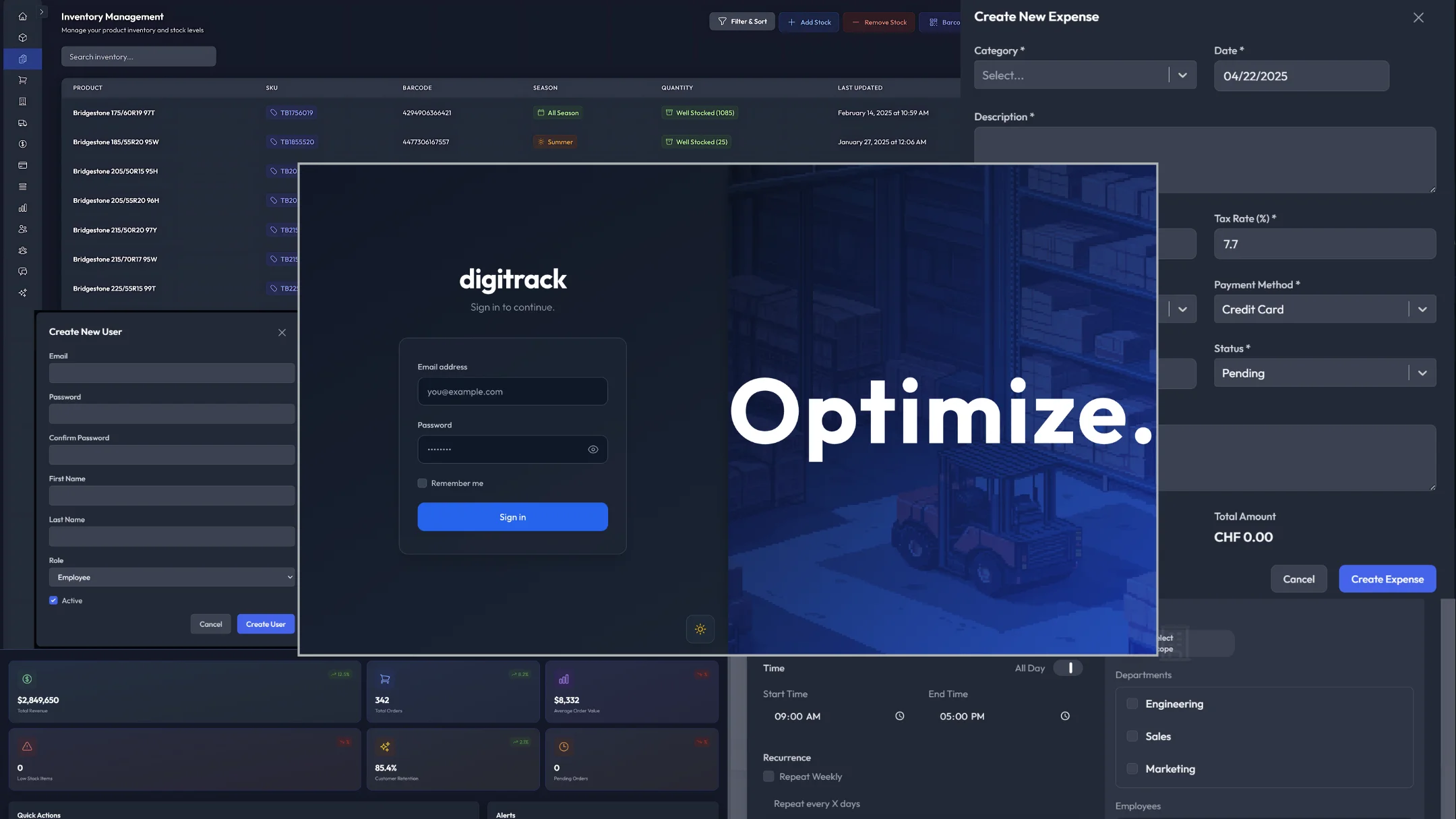
Digitrack ERP App Hero Image

The Challenge

The warehouse industry was drowning in outdated, bloated software that made simple tasks complicated. Companies juggled five or more separate apps—one for inventory, another for orders, a third for invoicing, separate tools for HR and task management—each with clunky interfaces designed in the 2000s. Workers needed dedicated IT teams just to navigate software that was supposed to make their jobs easier. The fragmented ecosystem meant constant app-switching, duplicate data entry, information silos, and endless frustration. Warehouse operations demanded a modern, all-in-one ERP system that felt intuitive from day one, not another complex beast requiring weeks of training and specialized staff just to operate.

Our Role

We handled all UI/UX design and frontend development for the Digitrack ERP platform. We owned the complete user experience design across all modules, built the entire TypeScript frontend application, and handled all API integration connecting the interface to backend services and AI automation systems.

The Approach

Our strategy centered on radical simplification through intelligent design. The goal wasn't to cram every feature into cluttered screens—it was to create a unified system where complex warehouse operations feel effortless. We prioritized intuitive workflows that mirror how warehouse teams naturally think about their work, not how legacy software forces them to operate. Every module needed to feel cohesive, visually consistent, and logically connected. The design philosophy: if users need a manual or specialized training, we failed. The app should guide users through inventory management, order processing, HR tasks, and analytics as naturally as browsing a well-organized warehouse.

Discovery & Research

We started by shadowing warehouse managers, inventory specialists, and logistics coordinators using their existing software stack. We watched them struggle with confusing navigation, hunt for basic features buried in menus, and waste time switching between apps to complete single tasks. Through interviews and workflow mapping, we identified critical pain points: no unified product location system (staff wasted hours searching for items), scattered data requiring constant re-entry across platforms, HR processes disconnected from operational planning, and zero real-time visibility into inventory or team activity. The key insight: these teams didn't need more features—they needed fewer apps, clearer information architecture, and intelligent automation that eliminated repetitive work without adding complexity.

Design & Development

We designed Digitrack as a cohesive ecosystem rather than a collection of modules. The navigation architecture needed to feel logical—users should instinctively know where to find product management, inventory tracking, orders, invoicing, HR, or analytics without hunting. We created a unified design system with consistent patterns, terminology, and interactions across all modules so learning one area automatically teaches you the others. The shelf location feature became a cornerstone—every product gets a precise warehouse location, turning hours of physical searching into seconds of digital lookup. We built the TypeScript frontend with performance optimization as a priority since real-time inventory tracking and live messaging can't afford lag. The UI balances information density with visual breathing room—warehouse dashboards need comprehensive data, but cramming too much creates cognitive overload. We integrated AI agents for automation carefully, ensuring they enhance workflows without confusing users who just want to get work done. Each module—product management, real-time inventory, orders, clients, suppliers, invoices, expenses, project/task management, reports/analytics, HR (employees, leave requests, scheduling), and messaging—received dedicated UX attention to ensure it solves real problems elegantly.

Final Design

The final Digitrack ERP platform unifies 12 comprehensive modules into one seamless, intuitive interface. What used to require juggling five separate apps now happens in a single, beautifully designed system that warehouse teams can master in hours, not weeks. Real-time inventory tracking, intelligent shelf location lookup, integrated HR management, and AI-powered automation work together to eliminate operational chaos and replace it with clarity, speed, and control.

Results & Outcomes

Digitrack successfully consolidated fragmented warehouse operations into a single, intelligent platform. Companies that previously relied on multiple disconnected apps and dedicated IT support staff now run comprehensive warehouse operations through one intuitive system that requires minimal training and delivers maximum efficiency.

Key Achievements

  • Unified 12 comprehensive modules into one cohesive platform: product management, real-time inventory, orders, clients, suppliers, invoices, expenses, project/task management, reports/analytics, HR (employees, leave requests, work scheduling), real-time messaging, and AI automation agents
  • Intelligent shelf location system that eliminates hours of manual product searching—workers find items in seconds with precise warehouse positioning
  • Real-time inventory tracking with instant updates across all modules, preventing stock discrepancies and duplicate data entry
  • Intuitive UI/UX requiring zero specialized training—warehouse teams become productive on day one without dedicated IT support
  • AI-powered automation agents that handle repetitive tasks (invoice generation, inventory alerts, report scheduling) without adding interface complexity
  • Integrated HR management connecting employee scheduling, leave requests, and work time planning directly to operational workflows
  • Live messaging and collaboration tools built directly into the platform, eliminating need for separate communication apps
  • Comprehensive reports and analytics with intuitive visualizations that turn raw warehouse data into actionable business insights

What We Learned

This project fundamentally changed how we think about enterprise software design. The biggest lesson: complexity is not the same as comprehensiveness. You can build a system with 12 integrated modules that still feels simple if you obsess over information architecture and user flows. We learned that warehouse workers don't want "powerful software"—they want software that gets out of their way so they can do their jobs efficiently. The most challenging aspect was resisting feature creep—clients kept requesting additions, and we had to constantly defend simplicity over bloat. If we were to approach this again, we'd invest even more time upfront in user flow mapping before touching design tools, as several navigation revisions could have been avoided with better initial planning. The shelf location feature taught me that sometimes the highest-impact innovation isn't flashy AI—it's basic functionality done exceptionally well. This experience reinforced that great enterprise UX isn't about making software look pretty; it's about making complex work feel effortless. We grew significantly as both a designer and developer, learning to balance ambitious scope with maintainable code architecture and discovering that the best interfaces are often the ones users don't consciously notice because everything just works.

Like what you see?

Let's create something amazing together

Start Your Project