Back to Work
Development

Monillo Website Design & Development

Unified car buying and chip tuning services into one seamless Swiss automotive experience that converts performance enthusiasts into loyal customers

Client Monillo GmbH
Year 2026
Services UI/UX Design, Next.js & TypeScript Development
Duration 1 month
Visit Project
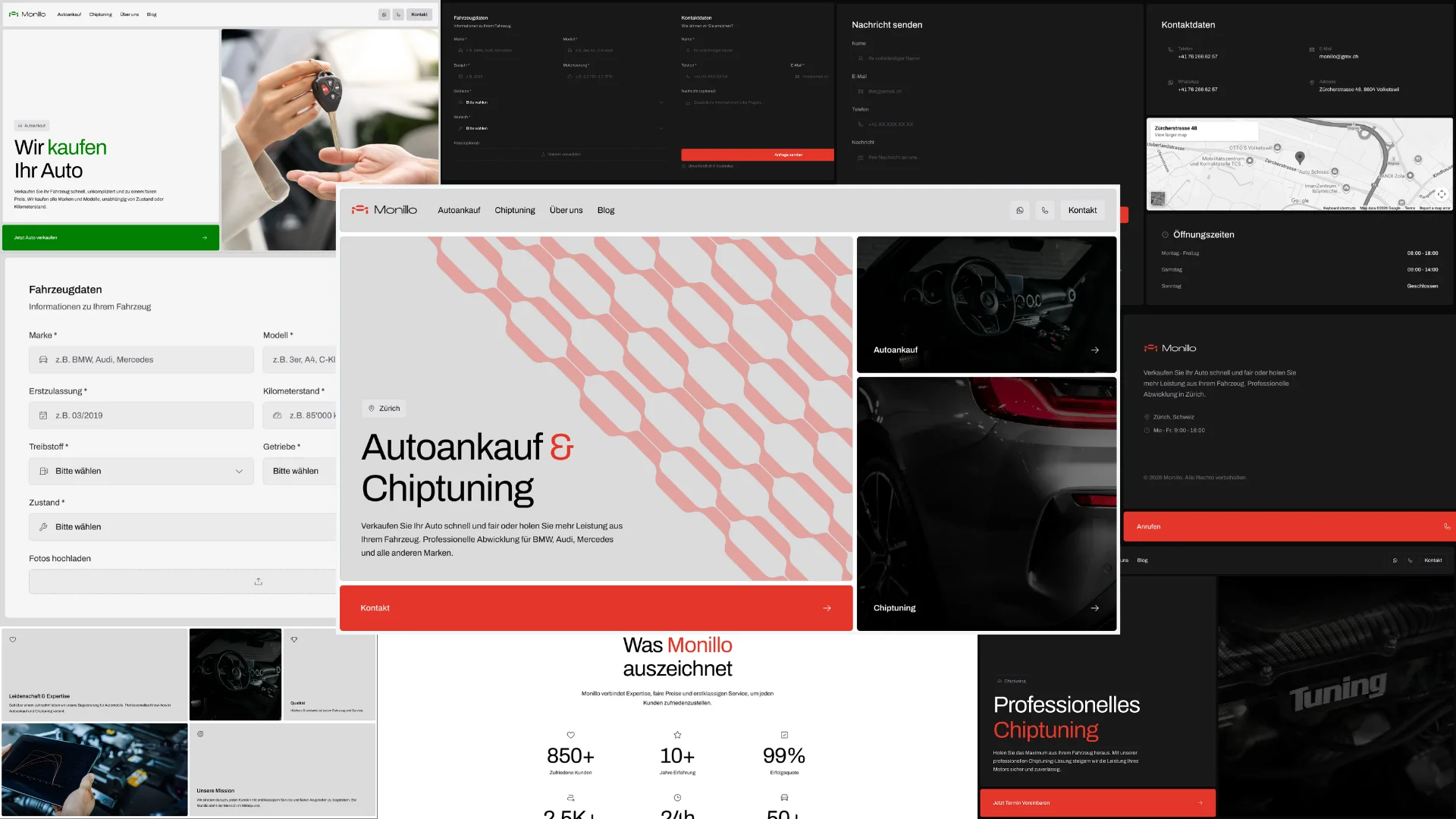
Monillo Website Hero Image

The Challenge

Monillo GmbH operates at the intersection of two distinct automotive services: car buying consultation and performance chip tuning. The challenge was creating a website that seamlessly presents these dual services without confusing visitors or diluting either offering. Most automotive service websites in Switzerland either focus exclusively on sales or performance modifications—rarely both. The risk was that combining these services would create a muddled brand identity, where car buyers feel intimidated by performance jargon and tuning enthusiasts dismiss the site as just another dealership. We needed to communicate Swiss precision and expertise across both services while making it immediately clear that Monillo handles the complete automotive journey—from finding the right car to unlocking its full potential.

Our Role

We handled all UI/UX design and Next.js development for the entire project, from initial wireframes and visual design through to TypeScript implementation and production deployment. We owned the complete design system, information architecture, and frontend development.

The Approach

Our strategy centered on creating two clear service pathways while maintaining a unified brand experience. Instead of forcing visitors to navigate a hybrid experience, we designed distinct entry points for car buyers and performance enthusiasts, each with tailored messaging and visuals. The goal was to make both audiences feel understood immediately—car buyers see expertise in vehicle selection and negotiation, tuning customers see technical credibility in performance optimization. Every design decision reinforced Swiss quality and precision, positioning Monillo as the comprehensive automotive partner rather than a fragmented multi-service shop.

Discovery & Research

We started by analyzing Swiss automotive service websites and European performance tuning shops—most fell into predictable patterns: car buying sites were corporate and conservative, while tuning shops were aggressive and technical. We studied dual-service businesses in other industries (fitness + nutrition, architecture + interior design) to understand how successful brands unify complementary offerings. We interviewed Monillo's existing customers to map their decision journey: some came for car buying and later discovered tuning services, while performance enthusiasts trusted Monillo's expertise to help them find the right base vehicle for modifications. The key insight was that these services aren't separate—they're sequential stages in an automotive enthusiast's journey. The website needed to reflect this progression rather than treating them as unrelated offerings.

Design & Development

We designed the website in Figma with a dual-pathway hero section that immediately presents both service options—visitors choose their entry point based on current needs. We developed a shared design language that works across both services: clean Swiss typography, precision-focused layouts, and performance-oriented visuals that never feel cheap or overly aggressive. Moving into Next.js development, we implemented server-side rendering for fast initial loads and SEO optimization, critical for local Swiss search visibility. We built a custom vehicle showcase system with filtering for both inventory browsing and tuning portfolio examples. The trickiest challenge was balancing technical depth for tuning customers (dyno charts, performance metrics) with accessibility for first-time car buyers who just want trustworthy guidance. We implemented progressive disclosure—showing essential information upfront while allowing deep dives for technical users.

Final Design

The final Monillo website successfully unifies car buying and chip tuning services through dual pathways that respect each audience's needs while reinforcing a cohesive Swiss precision brand. Visitors immediately understand both offerings and can navigate to their service of interest without confusion. The site positions Monillo as the complete automotive partner—from acquisition to optimization—building trust with conservative car buyers and credibility with performance enthusiasts. Fast, responsive, and built to convert both customer segments.

Results & Outcomes

The website successfully launched Monillo's dual-service offering with clear differentiation and unified branding. The dual-pathway approach effectively serves both car buyers and tuning enthusiasts without creating confusion, positioning Monillo as Switzerland's comprehensive automotive partner.

Key Achievements

  • Dual-pathway information architecture that serves car buyers and tuning enthusiasts without diluting either message
  • Complete execution: UI/UX design, information architecture, Next.js development, and production deployment
  • Server-side rendering implementation for optimal Swiss local SEO and fast initial page loads
  • Custom vehicle showcase system supporting both inventory browsing and performance portfolio examples
  • Progressive disclosure design balancing technical depth for enthusiasts with accessibility for first-time buyers
  • Unified Swiss precision brand language that works across both automotive services without feeling generic

What We Learned

This project reinforced that dual-service businesses don't need to choose between services or compromise both—they need clear pathways that respect each audience while maintaining brand cohesion. The biggest design insight was understanding that complementary services can strengthen each other when positioned as sequential stages in a customer journey rather than unrelated offerings. Technically, implementing Next.js SSR for a content-heavy automotive site taught me the importance of image optimization and lazy loading—performance matters even more when showcasing high-resolution vehicle photography. If we were starting over, we'd invest more time in customer journey mapping before touching design tools, as understanding the car-buyer-to-enthusiast progression earlier would have streamlined the information architecture. This experience fundamentally shaped how we approach multi-service businesses: find the connecting narrative, then design distinct pathways within a unified brand.

Like what you see?

Let's create something amazing together

Start Your Project