The Challenge
AI OPS was hemorrhaging clients because their order processing workflow was painfully slow. Every incoming order arrived as a PDF document—sometimes dozens of pages long—and staff had to manually read through each one, line by line, extracting product names, quantities, and specifications. This tedious scanning process meant quote turnaround times stretched from hours to days, frustrating customers who expected fast responses. In competitive industries where speed wins deals, slow quoting equals lost revenue. The company needed to eliminate this manual bottleneck or continue losing business to faster competitors.
My Role
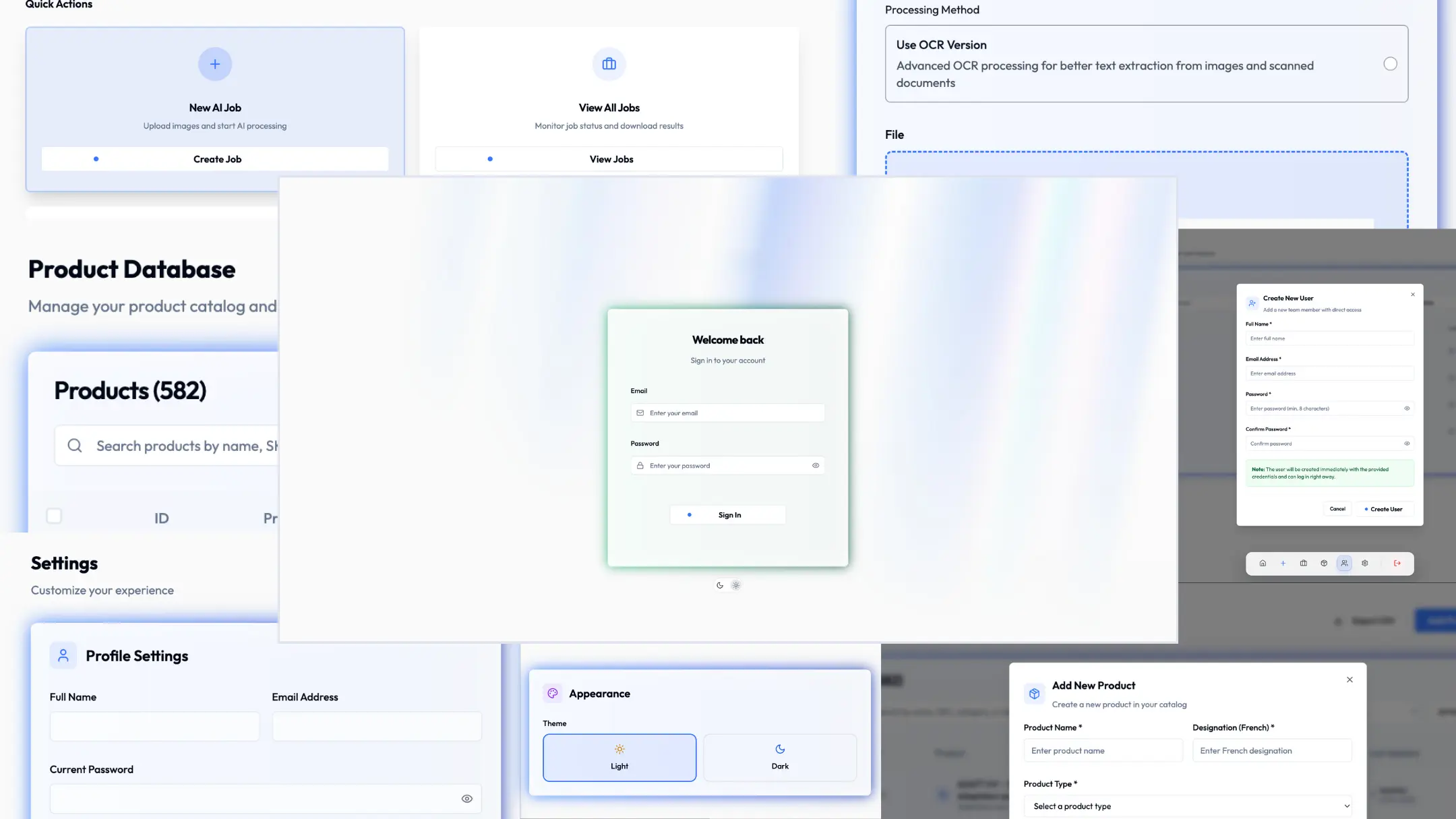
I handled all UI/UX design and frontend development for this AI automation project. I owned the complete user experience design, built the entire TypeScript frontend, and handled all API integration connecting the interface to the AI backend that powered the intelligent extraction and matching system.
The Approach
My strategy centered on workflow simplicity and zero-friction automation. The goal wasn't to build a complex system with a hundred features—it was to make the AI feel invisible. Users needed a straightforward path: upload PDF, see extracted data, match products, export to ERP. I prioritized intuitive design that required no training, ensuring staff could immediately benefit from AI automation without learning curves or confusion. Every interaction needed to feel effortless because the value was speed, not complexity.
